
360@CACC: A new path forward
Oct 06, 2025
PAWS saves thousands more homeless pets through an enhanced partnership with CACC.
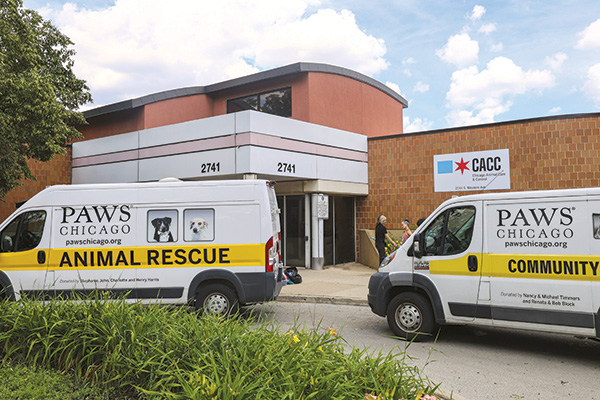
Mamas, a large and lovable white pit bull terrier with adorable brown spots, wiggled her way through the doors at Chicago Animal Care and Control (CACC) on a cold February day. But instead of being routinely processed as another large dog entering the city impoundment facility, a PAWS Chicago team member was there to help.
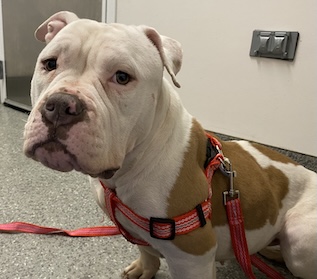
Through a supportive conversation, a common storyline emerged. Mamas had been abandoned outside in the extreme cold when her original owners moved away. A kind neighbor took her in, warmed her body and heart with nurturing, and ultimately wanted to keep her as a member of the family — but Mamas came down with a terrible bout of pneumonia. Without resources for costly veterinary care and treatment, the family was in line to give her up.
That’s when PAWS Chicago jumped into action. Mamas was booked for a free outpatient community medicine appointment at the PAWS Chicago Lurie Clinic, where she received the antibiotics and treatment she needed. And, of course, once healthy, she was spayed at no cost to prevent unwanted litters.
One less large bully breed entered the city shelter. One more family kept together. One less pet breeding.
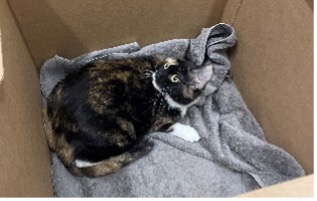
Charlotte was curled up in a tight ball in a cardboard box. Her family was simply devastated. They had rushed their beloved cat of eight years to the emergency clinic, but she had a uterine infection and required an emergency surgery that they could not afford. They brought her to CACC to be euthanized. When a PAWS team member greeted them at the door and discovered what was wrong, Charlotte was immediately booked for an emergency pyometra spay surgery at the Lurie Clinic. She was rushed over for surgery, and she was home with her family that night!
Mamas and Charlotte are two real-world examples of what PAWS Chicago’s innovative new partnership with Chicago Animal Care and Control is doing each and every day – finding ways to either keep pets out of the shelter system or save the lives of the pets who end up there. Called 360@CACC, this comprehensive program is oriented at providing 360-degrees of support for the underfunded and overstretched city shelter. And after its first year, there are positive results in both the number of animals saved and innovations to improve lifesaving and reduce euthanasia.
The surging Chicago homeless animal crisis
Around the country, there has been a surge of pet homelessness in the aftermath of the pandemic, and Chicago is no different. In 2023, intake increased by 10.2%, with 1,198 additional pets entering CACC over 2022.
On top of that, add a Chicago government fiscal crisis to the mix. Despite being the third-largest city in the U.S., Chicago has the lowest municipal animal control budget among major cities, with CACC operating on an annual budget of just $7.17 million in 2023 while peer cities have budgets ranging from $15-30 million. With budget freezes city-wide, additional investment was not coming for animals in need.
These worrying trends led PAWS Chicago and CACC to launch the 360@CACC partnership in November of 2023. And the challenges have only gotten worse since the launch.
In 2024, CACC recorded an intake of 15,262 pets — an 18% increase over 2023 and 30% increase over 2022. The numbers are spiking, and with a citywide budget crisis and hiring freeze, the city shelter cannot add services.
PAWS Chicago stepped in with 360@CACC — a robust suite of prevention and lifesaving programs that provide a safety net to Chicago’s homeless and at-risk cats and dogs.
The comprehensive suite of programs that make up 360@CACC
Pet Owner Support is the program that helped Mamas and Charlotte stay in their homes. By meeting families at the door, the PAWS Chicago team finds ways to support families and keep pets in the homes they already have. Even when families cannot keep the pet they have brought to CACC, PAWS offers additional services, like spay/neuter for other pets in the home to prevent more breeding, or direct intake to PAWS Chicago to keep pets out of the over-crowded city shelter. In 2024, Pet Owner Support provided medical care for 143 pets and 135 came directly to PAWS, preventing further overcrowding.
The Rescue Ready program launched thanks to funding from The Rachael Ray Foundation. This support increased the number of transfers to other shelters and rescue groups in Chicagoland by providing medical care for pets from CACC. Each year, transfer is the #1 way that homeless cats and dogs make it out of the city shelter alive. But in 2023, non-PAWS Chicago transfers decreased 13%. Due to difficulty accessing veterinary care, many shelters and rescue groups without their own veterinarians were transferring pets from other states because animals arrived spayed/ neutered and vetted.
With Rescue Ready, all cats and large dogs transferred from CACC to rescues without in-house veterinary capabilities are eligible for a $65 spay/neuter procedure and veterinary care at the PAWS Chicago Lurie Clinic. In 2024, transfers increased by 19%!
The Big Fix program ensures that pets at CACC are ready to go home when adopters come to the city shelter. By law, pets must be spayed or neutered before adoption, but the CACC medical team is stretched thin providing care for the 15,000 animals who enter their doors. That means adopters often wait weeks for a pet to be spayed or neutered before they can bring them home. With the Big Fix, PAWS volunteers drive CACC dogs to the Lurie Clinic for surgery.
In 2024, PAWS provided spay/neuter surgeries and medical care for 405 CACC animals through Rescue Ready and 931 CACC pets through The Big Fix. In total, 39 rescue groups transferred pets who received medical care from these two programs.
The Adoption Expansion program staffed a PAWS Chicago employee at CACC to support prospective adopters in finding and adopting a pet. The CACC budget has never had a staffed resource dedicated to adoptions, which means there is not often a clear process, approach or alignment of volunteers to help adopters. The PAWS staff position has helped change that by bringing additional resources to matchmaking and adoption counseling.
With this additional PAWS support, CACC facilitated 3,019 adoptions in 2024, a remarkable 28.6% increase.
The first year's impact
These 360@CACC programs work together towards a single purpose: lifesaving.
Despite intake increasing 18% in 2024 – resulting in an additional 2,295 cats and dogs entering the shelter – the save rate slightly increased, from 76% in 2023 to 76.8% in 2024. This means that homeless animals had a greater likelihood of leaving CACC alive.
At the same time, euthanasia increased by 416 animals, totaling 3,380 pets in 2024. But euthanasia would have increased by 77%, with 5,255 pets euthanized, without the additional lifesaving.
In 2024, 1,875 additional animals had a positive outcome, totaling 11,634 total cats and dogs who are alive thanks to the work of CACC, PAWS Chicago, the Chicagoland rescue community, and adopters who came together to save homeless animals.
The initial results have been inspiring, but the 360@CACC program is only getting started. Together, the 360 partnership is working towards a world where pets and families stay united, where fewer animals endure the uncertainty of shelter life, and where homeless pets in Chicago not only survive but thrive.
Investing resources where they're needed most
With a surging intake of more than 15,000 pets last year, the team at Chicago Animal Care and Control is doing the best they can to save lives. Through the generosity of the PAWS Chicago community, these innovative 360@CACC programs are investing in direct lifesaving services.
The Emergency Fund Leadership Council was established in 2024 to help fund the new 360@CACC program. Chaired by Stephanie Field Harris and Katie Gledhill, members commit annually to help Chicago’s most at-risk animals.
The Rachael Ray Foundation, one of the most generous national leaders supporting homeless animals, has made a leadership grant to fund spay/neuter efforts for CACC animals, increasing adoptions and transfers to dozens of rescue groups.
It takes a village to save homeless animals, and PAWS is grateful for these innovative funders.
Without additional 360@CACC lifesaving programs, like adoptions and transfers, euthanasia would have increased by 77%!
The Rachael Ray Foundation to the rescue
The Rachael Ray Foundation supports The Big Fix and Rescue Ready programs, helping hundreds of adopters and 39 other rescues transfer more at-risk animals out of CACC.
For The Rachael Ray Foundation, The Big Fix and Rescue Ready programs were ideal programs to further their mission.
“We believe in the importance of fostering collaboration among shelters in a manner that addresses urgent needs right now,” said John Hall from The Rachael Ray Foundation. “The Rescue Ready and The Big Fix programs leverage PAWS’s remarkable veterinary capabilities to facilitate pathways to adoption for more cats and dogs.”
The foundation’s generous funding helped PAWS provide spay/neuter and medical care for 1,336 CACC cats and dogs. These medical services ensured that animals could be transferred to other rescues, adopted out from CACC, or returned safely to their original owner. As a result, CACC adoptions were up nearly 29% in 2024, and transfers to other rescues increased by 1,156 cats and dogs.
“That’s a significant victory for Chicago animals in need,” said Hall.